Almost two decades after abortion was decriminalised in Victoria, where a woman lives can still determine whether she can access the reproductive healthcare she needs.
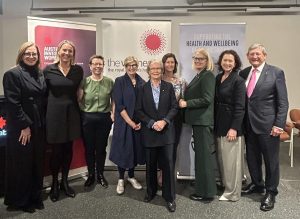
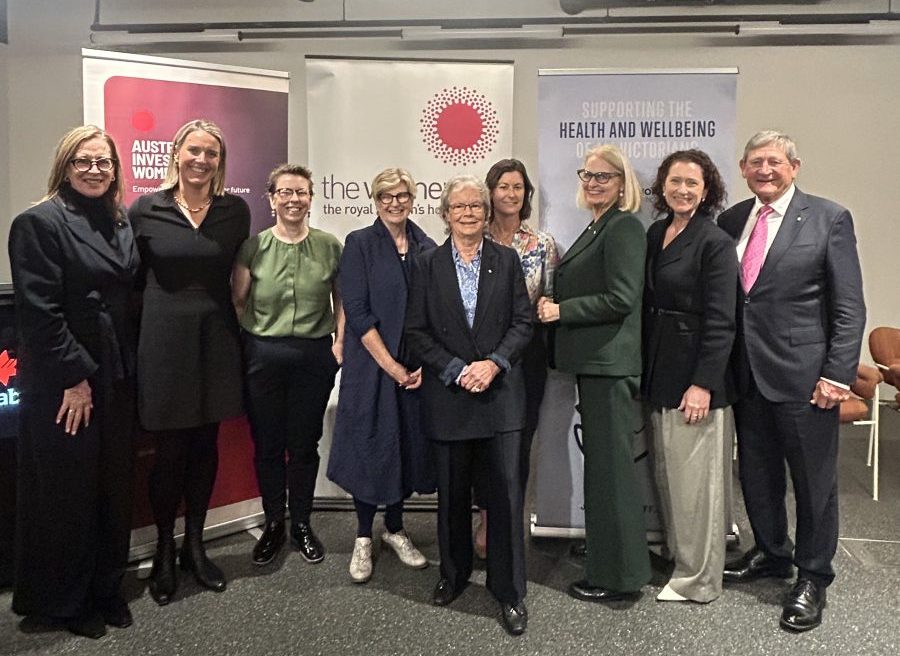
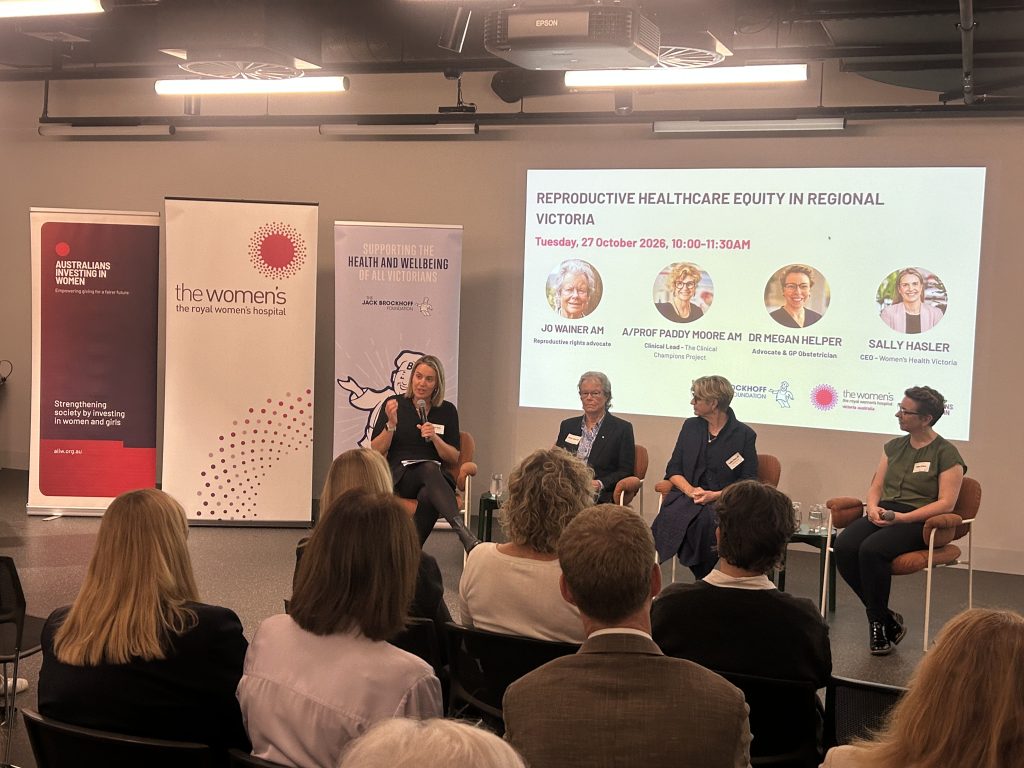
On 27 October, Australians Investing in Women (AIIW), the Jack Brockhoff Foundation and The Royal Women’s Hospital brought together 42 leaders from philanthropy and health to explore reproductive healthcare equity in regional Victoria, generously hosted by JBWere.
Moderated by Sally Hasler, CEO of Women’s Health Victoria, the conversation featured Dr Jo Wainer AM, A/Prof Paddy Moore AM and Dr Megan Helper, whose collective experience spans decades of advocacy, clinical practice and reproductive healthcare reform.
Together, they reflected on the progress made, the barriers that remain and the opportunities for philanthropy to support lasting change.
Progress made, barriers remain
Victoria’s decriminalisation of abortion in 2008 was a landmark achievement, built on generations of advocacy and clinical leadership. Yet as the panel reflected, changing legislation does not automatically change the systems responsible for delivering care.
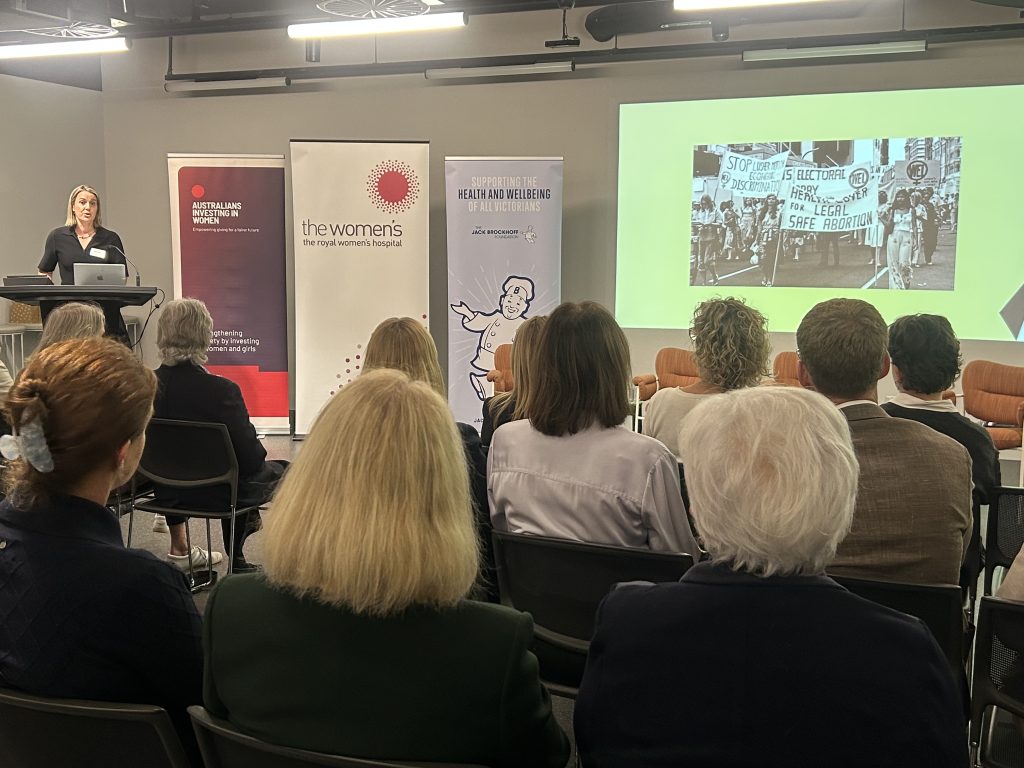
Dr Jo Wainer AM shared the realities of abortion before legal reform, when women faced unsafe procedures, extraordinary costs and serious risks to their lives. A/Prof Paddy Moore AM reflected on how decades of criminalisation and stigma shaped medical education, leaving lasting gaps in clinical training and service provision.
These historical barriers continue to influence access today, particularly in regional communities.
Data presented by Women’s Health Victoria revealed that women in highly disadvantaged regional areas were 242% more likely to contact 1800My Options after nine weeks of pregnancy than women in less disadvantaged metropolitan Melbourne.
Cost remains another significant barrier, with medical abortions averaging approximately $300, excluding ultrasounds, and surgical abortions around $900. Travel, accommodation and time away from work can add further costs for regional women.
The discussion reinforced an important distinction. Legal access does not necessarily mean equitable access.
Building the systems that support equitable care
The panel identified several opportunities to strengthen reproductive healthcare, including investing in clinical education, building local service capability, improving community information and referral pathways, and continuing conversations that reduce stigma.
Safe, evidence-based digital tools, including AI, were also explored as potential ways to help women navigate services and access reliable information.
These priorities demonstrate why lasting progress requires more than policy reform. It depends on coordinated investment in the people, infrastructure and systems that make care accessible.
Where philanthropy can make a difference
The conversation highlighted the Jack Brockhoff Foundation‘s landmark investment of more than $500,000 in The Royal Women’s Hospital, described as Victoria’s largest philanthropic commitment to abortion and reproductive healthcare.
Supporting the Clinical Champions Project, the investment will strengthen regional clinical capability and expand access across Gippsland, Sunraysia and the Grampians.
As Louise Kuramoto, Executive Officer of the Jack Brockhoff Foundation, reflected, the Foundation hopes its investment will not hold that distinction for long.
For AIIW, this is gender-wise philanthropy in action. By recognising how gender, geography and financial circumstances intersect, funders can identify opportunities to address systemic inequities and support sustainable change.
Practical opportunities are already available. The Royal Women’s Hospital is seeking support for regional services and clinical training, while Women’s Health Victoria is inviting investment in research, community awareness and its 1800 My Options service.
Dr Jo Wainer AM closed the discussion with a powerful reminder: “The women who have abortions also have our babies and they deserve our care.”
Victoria’s progress offers important lessons for the rest of Australia, and an opportunity for philanthropy to help translate decades of advocacy into more equitable healthcare.
Our sincere thanks to the Jack Brockhoff Foundation, The Royal Women’s Hospital, Women’s Health Victoria, JBWere, our speakers and everyone who contributed to this important conversation.
For funders interested in supporting reproductive healthcare equity, explore the work of The Royal Women’s Hospital and Women’s Health Victoria, or connect with AIIW to help continue the conversation across Australia.